実行時間制限: 2 sec / メモリ制限: 1024 MiB
配点 : 200 点
問題文
長さ N の正整数列 A=(A_1,A_2,\ldots,A_N) が与えられます。
A が等比数列であるか判定してください。
制約
- 2\leq N\leq 100
- 1\leq A_i\leq 10^9
- 入力はすべて整数
入力
入力は以下の形式で標準入力から与えられる。
N
A_1 A_2 \ldots A_N
出力
A が 等比数列ならば Yes を、そうでないならば No を出力せよ。
入力例 1
5
3 6 12 24 48
出力例 1
Yes
A=(3,6,12,24,48) です。
A は初項 3, 公比 2, 項数 5 の等比数列となっています。
よって、Yes を出力します。
入力例 2
3
1 2 3
出力例 2
No
A=(1,2,3) です。
A_1:A_2=1:2\neq 2:3=A_2:A_3 より、A は等比数列ではありません。
よって、No を出力します。
入力例 3
2
10 8
出力例 3
Yes
A は初項 10, 公比 0.8, 項数 2 の等比数列となっています。
よって、Yes を出力します。
Score : 200 points
Problem Statement
You are given a length-N sequence A=(A_1,A_2,\ldots,A_N) of positive integers.
Determine whether A is a geometric progression.
Constraints
- 2 \leq N \leq 100
- 1 \leq A_i \leq 10^9
- All input values are integers.
Input
The input is given from Standard Input in the following format:
N
A_1 A_2 \ldots A_N
Output
If A is a geometric progression, print Yes; otherwise, print No.
Sample Input 1
5
3 6 12 24 48
Sample Output 1
Yes
A=(3,6,12,24,48).
A is a geometric progression with first term 3, common ratio 2, and five terms.
Therefore, print Yes.
Sample Input 2
3
1 2 3
Sample Output 2
No
A=(1,2,3).
Since A_1 : A_2 = 1 : 2 \neq 2 : 3 = A_2 : A_3, A is not a geometric progression.
Therefore, print No.
Sample Input 3
2
10 8
Sample Output 3
Yes
A is a geometric progression with first term 10, common ratio 0.8, and two terms.
Therefore, print Yes.
実行時間制限: 2 sec / メモリ制限: 1024 MiB
配点 : 200 点
問題文
1 から N の番号がついた N 人の人がいます。
人 i はキーエンス本社ビルの建築面積を S_i 平方メートルであると予想しました。
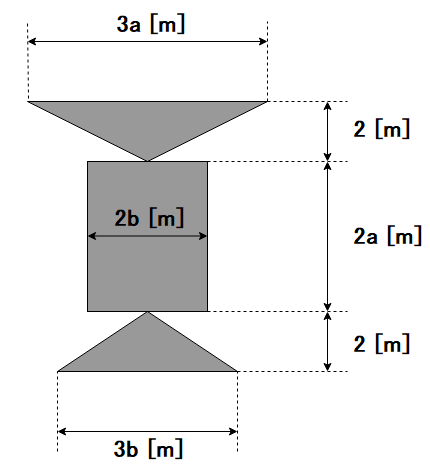
キーエンス本社ビルは下図のような形をしています。ただし、a,b はある 正の整数 です。
つまり、キーエンス本社ビルの建築面積は 4ab+3a+3b 平方メートルと表されます。
N 人のうち、この情報のみによって、予想した面積が確実に誤りであるとわかる人数を求めてください。
制約
- 1 \leq N \leq 20
- 1 \leq S_i \leq 1000
- 入力に含まれる値は全て整数である
入力
入力は以下の形式で標準入力から与えられる。
N
S_1 \ldots S_N
出力
答えを出力せよ。
入力例 1
3
10 20 39
出力例 1
1
a=1,b=1 のとき面積は 10 平方メートル、a=2,b=3 のとき面積は 39 平方メートルとなります。
しかし a,b がどのような正の整数であったとしても面積が 20 平方メートルになることはありません。
よって、人 2 の予想だけは確実に誤りであることがわかります。
入力例 2
5
666 777 888 777 666
出力例 2
3
Score : 200 points
Problem Statement
There are N people numbered 1 to N.
Person i guessed the building area of KEYENCE headquarters building to be S_i square meters.
The shape of KEYENCE headquarters building is shown below, where a and b are some positive integers.
That is, the building area of the building can be represented as 4ab+3a+3b.
Based on just this information, how many of the N people are guaranteed to be wrong in their guesses?
Constraints
- 1 \leq N \leq 20
- 1 \leq S_i \leq 1000
- All values in input are integers.
Input
Input is given from Standard Input in the following format:
N
S_1 \ldots S_N
Output
Print the answer.
Sample Input 1
3
10 20 39
Sample Output 1
1
The area would be 10 square meters if a=1,b=1, and 39 square meters if a=2,b=3.
However, no pair of positive integers a and b would make the area 20 square meters.
Thus, we can only be sure that Person 2 guessed wrong.
Sample Input 2
5
666 777 888 777 666
Sample Output 2
3
実行時間制限: 2 sec / メモリ制限: 1024 MiB
配点 : 300 点
問題文
英小文字のみからなる N 個の文字列 S_1,S_2,\dots,S_N が与えられます。
S_1,S_2,\dots,S_N から文字列を好きな個数選ぶことを考えます。
このとき、「選んだ文字列の中でちょうど K 個の文字列に登場する英小文字」の種類数としてあり得る最大値を求めてください。
制約
- 1 \le N \le 15
- 1 \le K \le N
- N,K は整数
- S_i は英小文字からなる空でない文字列である。
- 1 \le i \le N を満たす整数 i に対し、S_i に同じ文字は 2 個以上含まれない。
- i \neq j ならば S_i \neq S_j である。
入力
入力は以下の形式で標準入力から与えられる。
N K
S_1
S_2
\vdots
S_N
出力
答えを出力せよ。
入力例 1
4 2
abi
aef
bc
acg
出力例 1
3
S_1,S_3,S_4 を選んだ場合、a,b,c がちょうど 2 個の文字列に含まれます。
4 個以上の文字がちょうど 2 個の文字列に含まれるような選び方は存在しないため、答えは 3 です。
入力例 2
2 2
a
b
出力例 2
0
同じ文字列を複数回選ぶことはできません。
入力例 3
5 2
abpqxyz
az
pq
bc
cy
出力例 3
7
Score : 300 points
Problem Statement
You are given N strings S_1,S_2,\dots,S_N consisting of lowercase English alphabets.
Consider choosing some number of strings from S_1,S_2,\dots,S_N.
Find the maximum number of distinct alphabets that satisfy the following condition: "the alphabet is contained in exactly K of the chosen strings."
Constraints
- 1 \le N \le 15
- 1 \le K \le N
- N and K are integers.
- S_i is a non-empty string consisting of lowercase English alphabets.
- For each integer i such that 1 \le i \le N, S_i does not contain two or more same alphabets.
- If i \neq j, then S_i \neq S_j.
Input
Input is given from Standard Input in the following format:
N K
S_1
S_2
\vdots
S_N
Output
Print the answer.
Sample Input 1
4 2
abi
aef
bc
acg
Sample Output 1
3
When S_1,S_3, and S_4 are chosen, a,b, and c occur in exactly two of the strings.
There is no way to choose strings so that 4 or more alphabets occur in exactly 2 of the strings, so the answer is 3.
Sample Input 2
2 2
a
b
Sample Output 2
0
You cannot choose the same string more than once.
Sample Input 3
5 2
abpqxyz
az
pq
bc
cy
Sample Output 3
7
実行時間制限: 2 sec / メモリ制限: 1024 MiB
配点 : 300 点
問題文
縦 H マス横 W マスのグリッドがあります。グリッドの上から i 行目、左から j 列目のマスを (i, j) と呼びます。
グリッドの各マスには # と . のいずれかの文字が書かれています。(i, j) に書かれている文字を C[i][j] とします。また、整数 i, j が 1 \leq i \leq H と 1 \leq j \leq W の少なくとも一方を満たさない場合、 C[i][j] を . と定義します。
正整数 a, b, n が以下の条件を全て満たす時、(a,b) および (a+d,b+d),(a+d,b-d),(a-d,b+d),(a-d,b-d) (1 \leq d \leq n) の 4n + 1 マスを (a,b) を中心とするサイズ n のバツ印 と呼びます。
- C[a][b] は
#である。 - 1 \leq d \leq n を満たす整数 d について、 C[a+d][b+d],C[a+d][b-d],C[a-d][b+d],C[a-d][b-d] はいずれも
#である。 - C[a+n+1][b+n+1],C[a+n+1][b-n-1],C[a-n-1][b+n+1],C[a-n-1][b-n-1] のうち少なくとも 1 つは
.である。
例えば次の図で示された例では、(2, 2) を中心とするサイズ 1 のバツ印と (3, 7) を中心とするサイズ 2 のバツ印がグリッド上にあります。

グリッドにはいくつかのバツ印があります。バツ印を構成するマス以外に # は書かれていません。
また、異なるバツ印を構成するマス同士は頂点を共有しません。以下の 2 つのグリッドは異なるバツ印を構成するマス同士が頂点を共有している例で、このようなグリッドの状態は入力として与えられません。 例えば左のグリッドでは (3, 3) と (4, 4) が頂点を共有しているのが条件に反しています。

N = \min(H, W) とします。また、サイズ n のバツ印の個数を S_n とします。S_1, S_2, \dots, S_N を計算してください。
制約
- 3 \leq H, W \leq 100
- C[i][j] は
#または. - 異なるバツ印を構成するマス同士は頂点を共有しない
- H, W は整数
入力
入力は以下の形式で標準入力から与えられる。
H W
C[1][1]C[1][2]\dots C[1][W]
C[2][1]C[2][2]\dots C[2][W]
\vdots
C[H][1]C[H][2]\dots C[H][W]
出力
S_1, S_2, \dots, S_N を空白区切りで出力せよ。
入力例 1
5 9
#.#.#...#
.#...#.#.
#.#...#..
.....#.#.
....#...#
出力例 1
1 1 0 0 0
問題文に書かれた説明の通り、(2, 2) を中心とするサイズ 1 のバツ印と (3, 7) を中心とするサイズ 2 のバツ印が書かれています。
入力例 2
3 3
...
...
...
出力例 2
0 0 0
バツ印が 1 個も書かれていない場合もあります。
入力例 3
3 16
#.#.....#.#..#.#
.#.......#....#.
#.#.....#.#..#.#
出力例 3
3 0 0
入力例 4
15 20
#.#..#.............#
.#....#....#.#....#.
#.#....#....#....#..
........#..#.#..#...
#.....#..#.....#....
.#...#....#...#..#.#
..#.#......#.#....#.
...#........#....#.#
..#.#......#.#......
.#...#....#...#.....
#.....#..#.....#....
........#.......#...
#.#....#....#.#..#..
.#....#......#....#.
#.#..#......#.#....#
出力例 4
5 0 1 0 0 0 1 0 0 0 0 0 0 0 0
Score : 300 points
Problem Statement
We have a grid with H horizontal rows and W vertical columns. We denote by (i, j) the cell at the i-th row from the top and j-th column from the left of the grid.
Each cell in the grid has a symbol # or . written on it. Let C[i][j] be the character written on (i, j). For integers i and j such that at least one of 1 \leq i \leq H and 1 \leq j \leq W is violated, we define C[i][j] to be ..
(4n+1) squares, consisting of (a, b) and (a+d,b+d),(a+d,b-d),(a-d,b+d),(a-d,b-d) (1 \leq d \leq n, 1 \leq n), are said to be a cross of size n centered at (a,b) if and only if all of the following conditions are satisfied:
- C[a][b] is
#. - C[a+d][b+d],C[a+d][b-d],C[a-d][b+d], and C[a-d][b-d] are all
#, for all integers d such that 1 \leq d \leq n, - At least one of C[a+n+1][b+n+1],C[a+n+1][b-n-1],C[a-n-1][b+n+1], and C[a-n-1][b-n-1] is
..
For example, the grid in the following figure has a cross of size 1 centered at (2, 2) and another of size 2 centered at (3, 7).
The grid has some crosses. No # is written on the cells except for those comprising a cross.
Additionally, no two squares that comprise two different crosses share a corner. The two grids in the following figure are the examples of grids where two squares that comprise different crosses share a corner; such grids are not given as an input. For example, the left grid is invalid because (3, 3) and (4, 4) share a corner.
Let N = \min(H, W), and S_n be the number of crosses of size n. Find S_1, S_2, \dots, S_N.
Constraints
- 3 \leq H, W \leq 100
- C[i][j] is
#or.. - No two different squares that comprise two different crosses share a corner.
- H and W are integers.
Input
The input is given from Standard Input in the following format:
H W
C[1][1]C[1][2]\dots C[1][W]
C[2][1]C[2][2]\dots C[2][W]
\vdots
C[H][1]C[H][2]\dots C[H][W]
Output
Print S_1, S_2, \dots, and S_N, separated by spaces.
Sample Input 1
5 9
#.#.#...#
.#...#.#.
#.#...#..
.....#.#.
....#...#
Sample Output 1
1 1 0 0 0
As described in the Problem Statement, there are a cross of size 1 centered at (2, 2) and another of size 2 centered at (3, 7).
Sample Input 2
3 3
...
...
...
Sample Output 2
0 0 0
There may be no cross.
Sample Input 3
3 16
#.#.....#.#..#.#
.#.......#....#.
#.#.....#.#..#.#
Sample Output 3
3 0 0
Sample Input 4
15 20
#.#..#.............#
.#....#....#.#....#.
#.#....#....#....#..
........#..#.#..#...
#.....#..#.....#....
.#...#....#...#..#.#
..#.#......#.#....#.
...#........#....#.#
..#.#......#.#......
.#...#....#...#.....
#.....#..#.....#....
........#.......#...
#.#....#....#.#..#..
.#....#......#....#.
#.#..#......#.#....#
Sample Output 4
5 0 1 0 0 0 1 0 0 0 0 0 0 0 0
実行時間制限: 2 sec / メモリ制限: 1024 MiB
配点 : 400 点
問題文
整数 N が与えられるので、以下の条件を全て満たす最小の整数 X を求めてください。
- X は N 以上である。
- 非負整数 (a,b) の組であって、 X=a^3+a^2b+ab^2+b^3 を満たすようなものが存在する。
制約
- N は整数
- 0 \le N \le 10^{18}
入力
入力は以下の形式で標準入力から与えられる。
N
出力
答えを整数として出力せよ。
入力例 1
9
出力例 1
15
9 \le X \le 14 であるようなどの整数 X についても、問題文中の条件を満たすような (a,b) は存在しません。
X=15 は (a,b)=(2,1) とすると問題文中の条件を満たします。
入力例 2
0
出力例 2
0
N 自身が条件を満たすこともあります。
入力例 3
999999999989449206
出力例 3
1000000000000000000
入出力が 32bit 整数型に収まらない場合があります。
Score : 400 points
Problem Statement
Given an integer N, find the smallest integer X that satisfies all of the conditions below.
- X is greater than or equal to N.
- There is a pair of non-negative integers (a, b) such that X=a^3+a^2b+ab^2+b^3.
Constraints
- N is an integer.
- 0 \le N \le 10^{18}
Input
Input is given from Standard Input in the following format:
N
Output
Print the answer as an integer.
Sample Input 1
9
Sample Output 1
15
For any integer X such that 9 \le X \le 14, there is no (a, b) that satisfies the condition in the statement.
For X=15, (a,b)=(2,1) satisfies the condition.
Sample Input 2
0
Sample Output 2
0
N itself may satisfy the condition.
Sample Input 3
999999999989449206
Sample Output 3
1000000000000000000
Input and output may not fit into a 32-bit integer type.